
“Just Checking In” Is Doing You No Favors
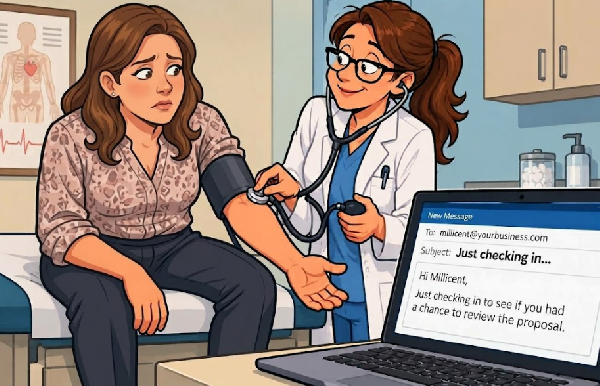
“Hi Millicent, just checking in to see if you had a chance to review the proposal.”
Look, there’s nothing sinful about this question, but when you send the subject line, “Just checking in,” to someone’s inbox, they might think, “Checking on what? My vital signs?”
The problem is that the phrase doesn’t give the other person much of a reason to do anything.
You want a response, but you haven’t given them anything new to respond to.
You’re Making Them do Work
“Just checking in” reminds me of asking your child, “How was school?” the second they get off the bus.You already know the answer: “Fine.”
It’s a lousy question because it asks a kid to summarize seven hours of their life on command. Ask, “Did something funny happen today?” and they’ll perk up and say, “Yeah, Austin farted in social studies.”
Business follow-up works the same way (hopefully minus the flatulence).
When you send “just checking in,” the recipient has to remember the earlier conversation, figure out what you want, and decide whether responding deserves a spot somewhere between the 46 other things they need to do that day.
The message is technically polite, but it puts almost all of the work on them.
Bring Something With You
A stronger follow-up gives the conversation somewhere to go.Maybe you saw an article related to something you discussed. Perhaps you met someone who would be a useful introduction. A prospect mentioned hiring a new employee, so ask how the search is going. If you had another thought about the problem they described, share it.
This doesn’t mean manufacturing a reason to email someone. People can smell that, too.
The point is to pay attention. Strong relationships are built when people remember what you told them, make useful connections, and occasionally show up with something other than another request.
That’s also a good reason to keep nurturing the network you already have instead of treating every interaction like the beginning of a sales sequence.
Sometimes, Just Ask
Cut to the chase.“Good Day, Millicent. I wanted to see whether this is still something you’d like to pursue.”
Or, “Are you still interested in moving ahead with the proposal?”
That’s direct without being obnoxious, and the recipient knows exactly why you’re in their inbox.
The Best Approach
In my expert opinion, the best way to follow-up on a proposal is to schedule a meeting to review it while you still have the person on the phone.Once you receive permission to send a proposal, finish the call with, “Milly, can we schedule a follow-up meeting to go over the proposal so I could answer any questions you have in real time?”
The Milly’s of the world usually say yes, because it shows you’re invested in their success. Plus, it’s harder for people to say no when you politely put them on the spot.
Now it’s on the calendar. No more chasing.
Your move, Chief.
About the Author, David Telisman

I am a Writer and Content Creator, and I work with businesses to inspire their customers to buy from them. I believe that my clients deserve to feel proud of how their content marketing looks and what it says, and I deliver by providing expert copywriting and marketing solutions.
Subscribe to our blog and YouTube channel, and follow us on Facebook and LinkedIn.
Oct 15, 2026 by
- share:


